Our popular blogger Steve Herbert considers how the recent budget is likely to affect employers
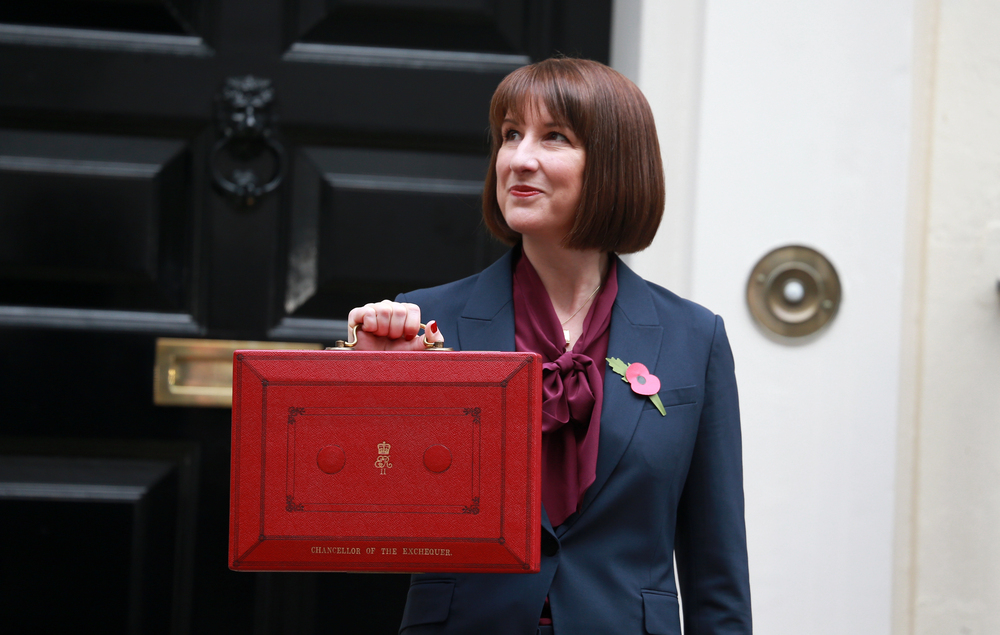
The 2025 Budget statement was a late one. Rachel Reeves delivered her Budget less than a calendar month from Christmas and thus, when we could all have reasonably been thinking of tinsel, turkey and trimmings, the nation was instead on tenterhooks as to how painful the Budget would be for businesses and taxpayers alike.
And pain was expected.
The chaotic run-in to the Budget was strewn with suggested national fiscal blackholes of anywhere between £10bn and £40bn. In the event there was no fiscal repair job needed, yet the Chancellor nevertheless went ahead with further revenue raising measures to add to the huge tax increases announced in last year’s supposed “once and done” tax raising Budget.
And one of the announced changes amounts to a rather unwanted Christmas present for millions of workers and their employers.
Changes to pensions tax relief
For finally, after years of speculation, a major change to the tax relief in workplace pensions has materialised.
Such a change is not unexpected, not least because the Budget documents suggest that some £70bn each year is being spent on a variety of tax reliefs to encourage the great British public to save for its collective old age. With so much Treasury money heading in that direction it was only a matter of time until at least some of this was curtailed.
But where specifically should the Chancellor look to make savings? The curtailment of higher-rate tax relief would have been an obvious – and entirely justifiable – target for a Labour government, as would a return of the Pensions Lifetime Allowance rules. Other viable options included lessening the Tax-Free Cash entitlement or adding a National Insurance (NI) liability to employer pension contributions. In the end the Chancellor settled on limiting the use of Salary Sacrifice in workplace pension schemes. Sadly, this is possibly the most administratively difficult change for employers to respond to.
What was announced?
Yet the announced change was not to remove the Salary Sacrifice option completely. Instead, the Treasury appear to have opted for a half-way house of limiting the amount of salary that can be exchanged for a higher employer pension contribution with its associated NI savings for both employer and employee. Reeves announced;
“The government is therefore capping the amount that can be sacrificed without paying NICs at £2,000 per employee from 2029.”
The Budget documents went on to justify the limitation as protecting lower earners who are saving into a pension scheme. Indeed, it was suggested that;
“74% of basic rate taxpayers and their employers currently using salary sacrifice will be unaffected by this change.”
Whilst this is welcome it does however ignore a stark reality. Flip that number on its head and it is apparent that up to 26% of basic rate taxpayers will be impacted by this change. And what about higher and additional rate taxpayers? This is a valid concern, not least because more of us are paying higher rates of tax as a direct result of the tax threshold freezes imposed across most of the 2020s by this administration and the previous Conservative one also.
So, if employers are to maintain the salary sacrifice option for pension contributions, then they may be looking at multiple communication exercises aimed at a variety of different employee groupings.
Admin and cost challenges
Yet the problems for employers don’t stop there.
One of the complexities of salary sacrifice in pensions is that it can be used in a variety of ways. Some employers reinvest all or part of the employer NI saving to boost the employee’s pension fund, others pocket the change for general business expenses, and at least 1 in 10 actively use the NI saving to support other employee benefits offerings for their workforce.
In addition, there are those that use salary sacrifice not as a vehicle for retirement savings as much as a legitimate way of avoiding moving past the next earnings tax threshold, to minimise tax and NI costs on bonus payments, or to artificially reduce salary so that they remain entitled to valuable state benefits such as childcare support.
And many – perhaps most – larger employers have a mixture of approaches making the unravelling of salary sacrifice a real headache.
Don’t panic but do prepare!
All that said, we should perhaps focus on the one positive of this announcement. The change is not due to take effect until the 2029/30 tax year. In simple terms employers have more than three full tax years to understand and prepare for the change. This planning window will be much needed.
In particular employers should recognise that aside from understanding the detail, costs, and ramifications of the change they may also need to liaise with professional advisers. Payroll providers, legal advisers, pension intermediaries, and pension providers will all need to be part of the plan to ensure that the change is delivered accurately and on time. And there is every possibility that such expertise will be difficult to find in the tax year before implementation of the change. The bottom line is that the prudent employer will start planning early to minimise the downsides of the change and maximise the many remaining positives of pension savings.
An unwanted gift
This certainly isn’t the present that most employers would have wanted this Christmas. But many will at least welcome the fact that there is ample time to prepare for such a major change in the three plus years between announcement and implementation. I will doubtless comment further on this in the new year.
In the meantime, and despite this extra headache, I would like to wish you all a very happy Christmas and a prosperous New Year. See you in 2026!

About the author
Steve Herbert is Brand Ambassador for Occupational Health Assessment Limited and a veteran, award-winning, speaker and commentator on HR and Employee Benefit issues.
—
Image: Deposit Photos