New global research drawing on interviews with senior HR and people leaders is challenging long-held assumptions about the role of HR and setting out a blueprint for a more human-centred, strategic People and Culture function.
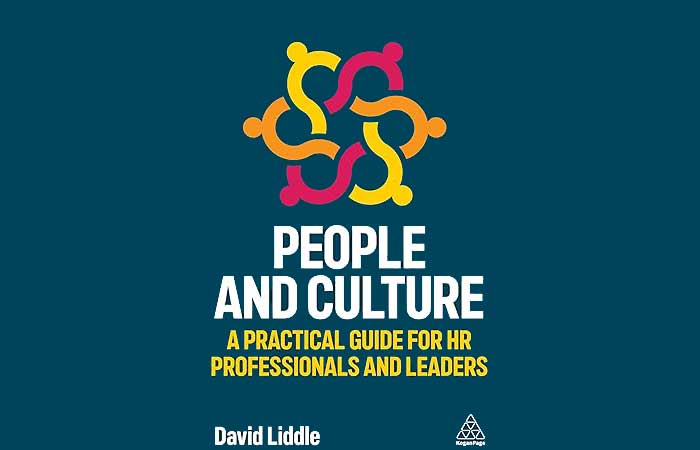
The findings are featured in a new book by workplace transformation expert David Liddle, People and Culture: A Practical Guide for HR Professionals and Leaders, published on 3 January by Kogan Page.
Based on in-depth interviews with 30 influential global people leaders, the book explores how organisations are moving away from transactional, compliance-driven HR models towards approaches built on trust, employee voice, inclusion and shared leadership.
At the heart of the book is Liddle’s People and Culture Operating Model, designed to help organisations make this shift. The model is built around five integrated domains: People, Culture, Strategy, Justice and Value, positioning People and Culture as a central driver of organisational performance rather than a support function.
According to Liddle, the traditional HR model is no longer fit for purpose in a complex and fast-moving world of work. Instead, he argues for a dynamic approach where People and Culture shapes decision-making, leadership and organisational life.
The book has been endorsed by senior figures in the profession. David D’Souza, Director of Profession at CIPD, said:
“People and Culture manages to pull off the rare trick of being practical and provocative. A tightly written and accessible reflection on what we know about the present and future of work and what a joined up intelligent response to the challenges and opportunities facing us might be. Full of real-world examples and practical frameworks, it’s an invaluable guide to rich thinking in this space and a challenge to build better and more productive work for all.”
Eight defining elements of a modern People and Culture function
Common themes emerged from the interviews with senior people professionals, pointing to eight defining elements of a future-ready People and Culture function:
-
The Chief People Officer as a Strategic Culture Architect – CPOs should sit at the executive heart of the organisation, working in partnership with the CEO to shape direction, performance and transformation.
-
Listening as Strategic Infrastructure – Employee voice becomes part of governance, not just feedback, through listening loops, “stay” interviews and co-creation forums.
-
The End of Punitive HR – Blame-based grievance systems are replaced by mediation, early resolution and restorative justice.
-
Psychological Safety as a Performance Requirement – Trust, openness and constructive challenge are essential for innovation, retention and resilience.
-
Values Lived, Not Laminated – Organisational values must be embedded in everyday behaviours, leadership decisions and performance practices.
-
Distributed Power and Leadership – Rigid hierarchies give way to shared leadership, collaboration and participatory decision-making.
-
Continuous, Human-Centred Performance – Annual appraisals are replaced by ongoing, relationship-based performance conversations focused on growth and purpose.
-
Ethical Technology and AI – CPOs act as ethical stewards of digital transformation, ensuring technology enhances dignity and trust rather than undermining them.
HR urged to move beyond a bygone era
Through practical guidance, case studies and actionable tools, the book aims to equip HR professionals and leaders to act as culture catalysts within their organisations.
Liddle argues that HR must evolve beyond its historical role and adopt a more authentically human approach to meet the demands of today’s workplace. Central to this is a shift from the concept of the HR Business Partner to the People Partner, reflecting the view that employees are not resources or assets, but the organisation itself.
HR reimagined as the chief architect of change
David Liddle said:
“Change is in the air. As our world shifts, HR can no longer stand at the edge or hide behind legacy systems and inherited processes. It must enter the arena – redesigning systems, recalibrating leadership, and enabling cultures to flourish. As the People and Culture agenda gathers strategic momentum, HR is being reimagined as the Chief Architect and co-creator of transformation.
“This is not aspirational. The global leaders I interviewed have already made that critical shift to a true People and Culture function – and their organisations are feeling the benefits. They spoke openly to me about moving away from transactional, compliance-driven management towards strategic, inclusive and transformational approaches. In these organisations, retribution is being replaced by restoration, compliance by trust, and control by collaboration.
“This isn’t about rejecting HR’s legacy or denying the value it has delivered. It’s about responding to a rapidly changing world with something more courageous, more connected and more authentically human. Above all, it recognises that people’s wellbeing, engagement, contribution and potential are the primary drivers of sustained business excellence.”
Comments on the Research
Book reviewers have said of David’s book:
‘A thoughtful blueprint’ Dave Ulrich
‘Incredibly compelling’ Dan Pontefract
‘A powerful contribution’ Enrique Rubio (he/him)
‘A catalyst for meaningful change’ Sara Andrews
‘Challenges the HR profession to be better and do better’ Shakil Butt
‘Genuinely inspiring’ Margaret Ayres
‘A work of true genius’ Perry Timms
About David Liddle
David Liddle is the CEO of the TCM Group, founding editor of The People Leader Magazine and president of the People and Culture Association. For over twenty years, David Liddle and his team have been delivering award winning people, culture and leadership programmes for organizations across the globe.
Based in London, UK, in 2025 he was recognised as the Most Influential HR Thinker by HR Magazine, and he is a member of the Thinkers50 Radar. He is a proud Fellow of the Institute of Leadership and the RSA. In 2025, he was also awarded the prestigious Consultant of the Year Award at the Consultancy Awards. He is author of Managing Conflict and Transformational culture, both of which are published by Kogan Page.
References
http://pressreleases.responsesource.com/newsroom/TheTCMGroup