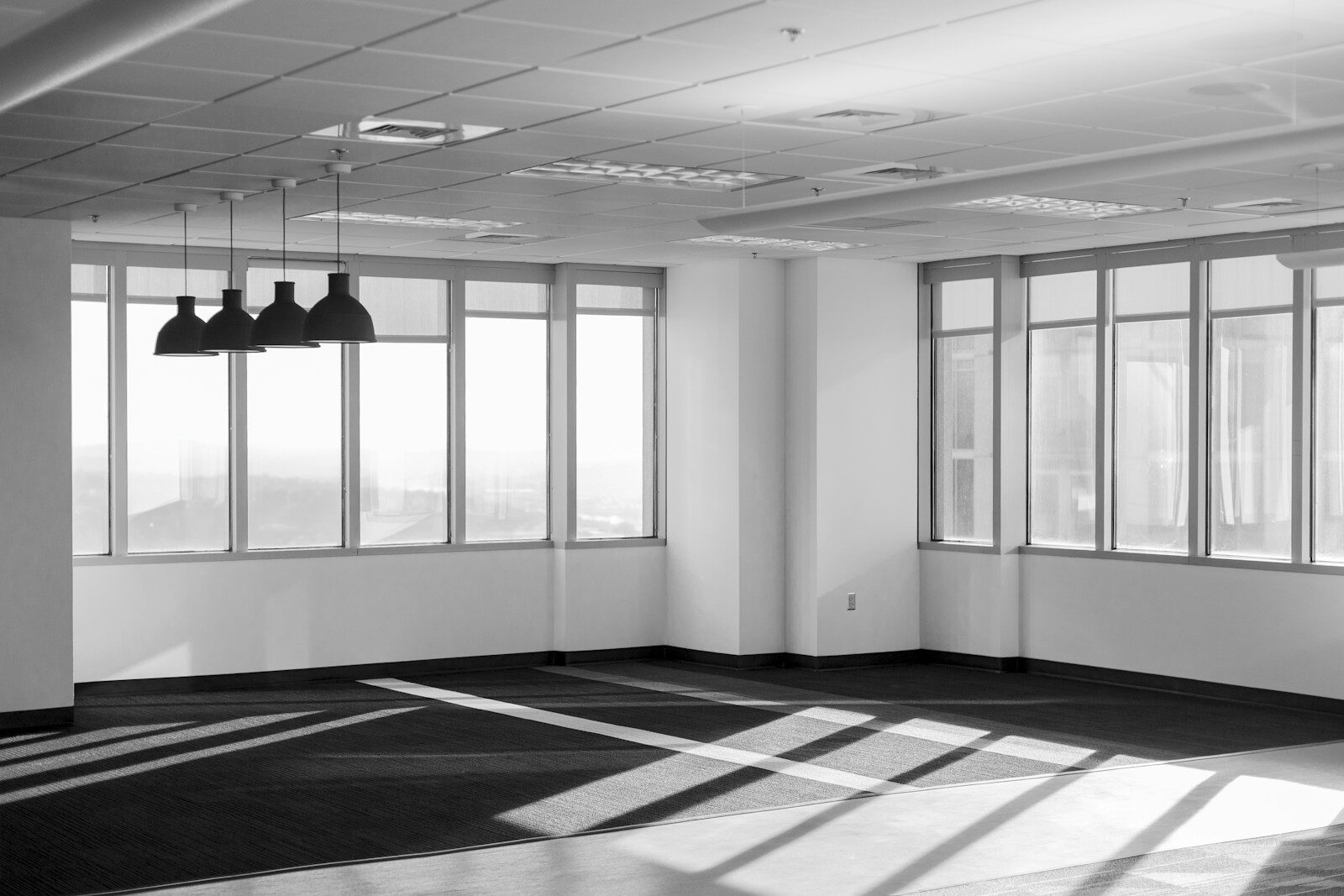
The best ways to save money on your office fitout are to plan carefully before you sign a lease, reuse what is already there, negotiate a contribution from your landlord and only pay for features your team will actually use.
The opportunity to change flooring, colour schemes, furniture and layout can add huge value to the business – especially in terms of employee productivity, wellbeing, brand culture and company identity.
However, an office fit out can easily start to escalate in price and it is not uncommon for London businesses to spend £200,000 or £500,000 on an office upgrade – so finding ways to save on cost can be hugely beneficial.
What Is an Office Fitout and How Much Does It Cost?
An office fitout is the work needed to turn a space into a usable workplace, from lighting and partitions to furniture and IT. It is usually split into two stages.
According to office fit out company, Soul Space, offices are categorised as cat A or cat B.
Category A, or Cat A, is the basic finish a landlord typically provides, such as raised floors, suspended ceilings, lighting, air conditioning and toilets. Category B, or Cat B, is everything that tailors the space to your business, including meeting rooms, kitchens, furniture, branding and IT infrastructure.
Knowing which stage is included in your lease, and which you will be paying for, is the first step to controlling costs.
The cost of an office fitout depends on the size of the space, its current condition and the specification you choose. A light refresh of an already fitted office will cost a fraction of a full Cat B fitout in a shell space.
Because fitouts are usually priced per square foot, reducing the area you fit out is one of the simplest ways to save. Get at least three quotes, and make sure every contractor is pricing against the same detailed brief so you can compare like with like.
Can I Get My Landlord to Pay for Part of the Fitout?
Yes, it is possible that landlords may contribute towards your fitout, especially if it increases the value of their offices and building. They may agree to offer a longer rent-free period to offset the cost, carry out some of the work themselves and particularly if you are signing a longer lease or the building has been empty for a while.
These incentives are best negotiated before you agree heads of terms, as your leverage drops considerably once the lease is signed.
Another way to save is to choose a fitted or plug-and-play office, where the landlord has already paid for the meeting rooms, kitchen and often the furniture. You can usually move in within weeks rather than months, which also saves on overlapping rent at your old premises.
It is also worth asking whether the previous tenant’s fitout can stay in place. Inheriting partitions, kitchens or cabling can dramatically reduce what you need to spend. The trade-off is less control over the layout and look of the space.
How Do You Manage Costs During an Office Upgrade?
If you are looking to spend £200,000 or £500,000 on an office fit out, you may not have all of this in cash available. Whilst it is likely that you will pay a deposit and make repayments in stages, you may benefit from some financial assistance to help you cover all the necessary costs.
Options may include using an unsecured business loan, or a secured loan against the property – however, this option is only viable if you own the property, which would be you or the landlord.
Other choices might include using a business credit line, which allows you to draw down money as and when you need it, and you can repay at the end of each month, making it very cost-effective to reuse. Checking prices is key, since FlexiPay by Funding Circle is very affordable at 1.99% per month, whereas Capital on Tap charges 3.0% per month.
How Can I Save Money on Office Furniture?
You can save money on office furniture by reusing what you already own and buying refurbished rather than new wherever quality allows. Furniture is one of the easiest areas to cut costs without compromising the finished office.
- Reuse desks, storage and meeting room tables from your current office
- Buy refurbished or remanufactured furniture, which is often a fraction of the price of new
- Consider leasing furniture to spread the cost
- Stick to standard sizes and finishes rather than bespoke pieces
- Spend more on good chairs, which affect comfort every day, and save on items people use less
Hybrid working can cut your furniture bill further, as it usually means you can fit out fewer desks and spend more on the spaces people actually come into the office for. If your team only attends a few days a week, there is little point paying for a desk per person.
Measure real attendance before you finalise the design, then invest in meeting rooms, collaboration areas and quiet booths instead. A simple desk booking system can help you get the most out of a smaller number of workstations.
How Do I Stop My Fitout Going Over Budget?
You stop a fitout going over budget by fixing the brief early, building in a contingency and keeping changes to a minimum once work starts. Late changes are one of the most common reasons costs escalate.
- Sign off a detailed brief and design before you go out to tender
- Set aside a contingency of around 10 to 15% for unexpected costs
- Agree a fixed-price contract where possible
- Check what is excluded from quotes, such as IT cabling, out-of-hours working or building control fees
- Apply for your landlord’s consent for alterations early, as delays can be costly
- Consider appointing a project manager for larger or more complex fitouts
“Most fitouts don’t go over budget because of the build itself, but because of decisions made halfway through. Agree exactly what you want at the start and stick to it,” Tannenbaum adds.
Will My Fitout Affect Dilapidations When I Leave?
Yes, your fitout is likely to affect what you owe in dilapidations at the end of your lease. Many leases require you to strip out your alterations and return the space to its original condition, which can be expensive.
Before you start work, check your lease and try to agree which items can be left behind. Keeping your fitout simple and reusable can reduce the cost of moving out as well as moving in.