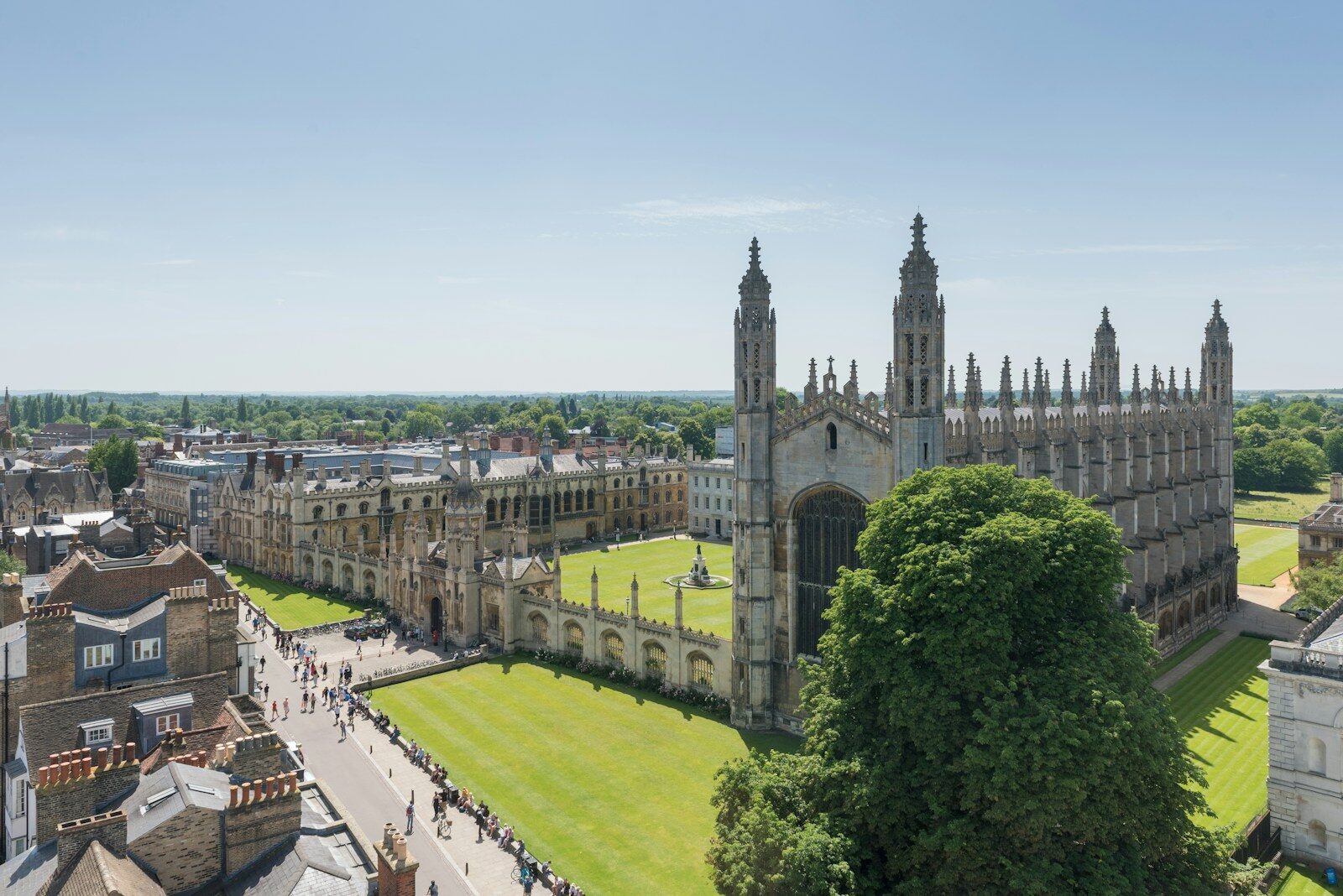
Steve Herbert reflects on the tragedy of Jason Arday and the lessons for HR teams and their recruitment processes.
The summer holiday weeks are often seen as the “silly” season in the national media. It’s a time when strange stories seem to dominate the otherwise barren headlines.
Yet 2026 should have been rather different with so much headline gold readily available. A new Prime Minister and Cabinet took office during the Parliamentary recess, the leader of a major political party fought an unwanted (and unnecessary) byelection against a bin, and a series of heatwaves led to national drought and huge wildfires. In short there was, and is, more than enough domestic copy for journalists to keep the headline plates spinning.
Yet, despite these significant distractions, the media somehow also found the time to cover a small squabble in strictly academic circles to a predictable – if deeply tragic – conclusion.
For those that have been abroad or just not following the news closely, it is worth reading this article from The Independent. This sad tale centres on Jason Arday, the youngest ever black professor of no less a University than Cambridge.
Arday had reportedly overcome severe autism and other hurdles in his rise to the top of academia. Accordingly, his Cambridge appointment was widely celebrated and promoted. This led to numerous appearances on TV and radio and he was seen as a “go-to” voice by the media in his specialist areas of sociology and equality.
Tragedy
Yet the world of academia has always been prone to bouts of jealousy and back-biting, and Arday’s rise had clearly created enemies along the way.
It is apparent that some individuals and some media outlets set out to damage Arday’s reputation. Initial claims of plagiarism were investigated and found to be untrue, yet that didn’t stop his detractors from the pursuit.
Further claims were then made – this time with some foundation – that much of his backstory was untrue or at least exaggerated. This led to his employer publicly announcing official investigations into these matters. Under such intense scrutiny Arday then chose to resign to protect both himself and his young family.
And there the matter for the national media should have ended. Yet, bizarrely, it didn’t.
The media circus intensified even further. It has been estimated that the series of claims against Arday resulted in around 250 articles written about him in just 22 days. In the end the pressure appears to have been too much, and Arday was found dead last weekend.
Blame
Whatever the rights and wrongs of the claims made against Arday, this is a tragic tale and one that leaves so many people in the national media, social media, academia, and at his employers at Cambridge University, with much to contemplate and explain. Someone, somewhere, will end up carrying some of the can for this awful tragedy that has resulted in two young children losing their father.
And, when the blame bottle stops spinning, it is quite possible that the Human Resources team(s) responsible for the detail of his appointment might find themselves having to justify the selection and appointment of Arday, their career and qualification checking procedures, and their duty of care throughout the media witch-hunt of the last few weeks.
What can HR learn from this?
We can – indeed must – learn from such tragedies.
I have no idea how detailed the vetting process was (or wasn’t) regarding the appointment of Arday to such a potentially prominent position, but it goes without saying that had it been done well then this issue could, and should, have been curtailed very swiftly.
Had Arday’s back story and qualifications proved to be problematic, then the appointment might not have taken place at all or could have been made with caveats and a plan in place to defend the appointment if/as necessary.
Alternatively, had they resulted in a “clean” history, then rebuttal of the claims could have been made swiftly and the story need never have taken hold.
Either approach would have produced a far, far better outcome than the reality of where we are today. And this is a lesson that other HR teams in other sectors would be wise to heed. For no one wants to preside over this sort of tragedy within their own workplace and employment community.
What about AI use in recruitment?
Yet this case perhaps also raises a further red flag for the (over) use of Artificial Intelligence (AI) at the candidate selection stage of recruiting.
Whilst AI is unlikely to have been a factor in the Arday appointment, the continued adoption of this technology suggests further potential problems ahead in recruitment. Indeed, survey after survey suggests that Artificial Intelligence is now being used routinely to scan CV’s and make the initial assessment of which applications should progress. This appears to be happening in the private, public and third sectors, and is clearly the direction of travel for so many hard-pressed and understaffed HR teams.
Yet, if there is one thing that we all know about AI, is that it cannot always be relied on to fact check well. Likewise current AI models are still a million miles away from picking up the verbal and non-verbal human indicators that might raise initial red flags or possible avenues for more detailed consideration too.
It follows that a reliance on such AI systems might well result in candidates which human HR assessment would have rejected entering the latter stages of the recruitment process. And, once actively inside the system, the chances of further evidence being sought diminish until a job offer is finally made.
The problem here is that for many senior posts much time, expense, management goodwill and political capital is often spent in securing the chosen individual. Detailed, retrospective, historical investigation is then not particularly welcome. Indeed, it is likely that an instruction towards minimal checks and rubber-stamping is sometimes implied. A possible example of this scenario was evident in the coverage of Peter Mandelson’s appointment as US Ambassador earlier this year. It is likely that similar situations occur routinely across other employers and sectors.
This, of course, leaves HR teams exposed if something related to that appointment subsequently goes wrong. It seems to me that the increased use of AI magnifies the opportunities for similar mistakes across so many British employers in the years ahead.
This is not to say that Artificial Intelligence shouldn’t help in the recruitment process where necessary. But AI is only a tool. And like all tools it needs human guidance to produce best results. It follows that HR teams should always ensure human oversight of the recruitment process is in place to protect the candidate, the employer, and indeed the Human Resources team also. For the Arday case is a tragedy that no responsible employer would ever want to repeat.
Steve Herbert is Brand Ambassador for Occupational Health Assessment Limited and a veteran, award-winning, speaker and commentator on HR and Employee Benefit issues.