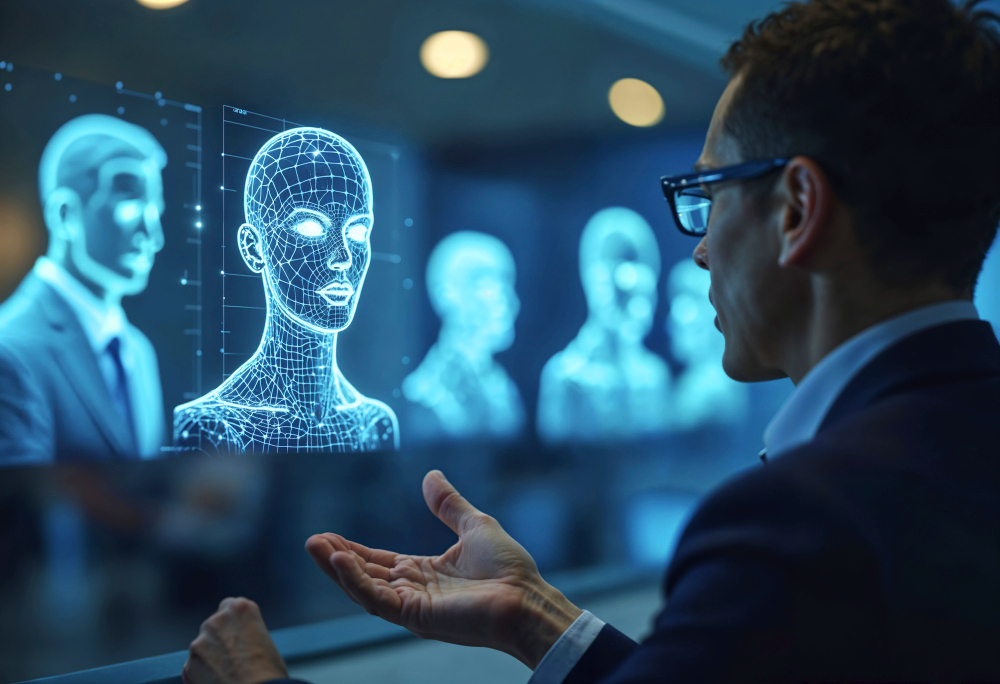
Artificial intelligence is no longer a futuristic concept — it’s here, reshaping how we learn, work, and live. Yet amid all the noise about automation, algorithms, and disruption, one truth is clear: the future of work won’t be decided by technical know-how alone. It will be led by people who pair digital fluency with emotional intelligence and ethical courage.
At Purposeful Change, we see every day how organisations and individuals are wrestling with AI’s impact on skills, identity, and belonging. Five themes stand out — each pointing to a more human future of work.
1. AI-Driven Skill Shift & Role Redesign
The rise of AI doesn’t signal the end of human work, but the redesign of it. The question is not “Which jobs will disappear?” but “Which outcomes can only humans and machines achieve together?”
For individuals: This means cultivating meta-skills such as systems thinking, critical inquiry, storytelling, and reflective practice, alongside technical literacy. AI should be treated as a thinking partner, not a task replacer.
For organisations: The winners will invest in AI capability labs and in-role upskilling rather than tokenistic offsite training. Roles need to be redesigned for human-machine teaming — shifting focus from tasks to outcomes.
2. Gen Z’s AI-Anxiety and the Pivot Toward Hands-on Work
Gen Z is often described as “digital natives” — but they’re also the first to push back against digital dominance. Many are seeking purpose and dignity through embodied, hands-on work.
“This isn’t a retreat,” Simon says, “it’s a reclamation of dignity. Gen Z are reminding us that mastery, community, and meaning matter more than status or titles.”
For individuals: It’s about honouring the choice to pursue meaningful, human-first professions, from trades to blended careers such as AI-powered coaching or tech + craft.
For organisations and educators: Apprenticeships should bridge digital and physical roles — carpentry informed by AI, regenerative farming using drones. Mental health support and career storytelling workshops can help young workers navigate ambiguity with confidence.
3. Mid-Career Reskilling & Second Acts
Career growth is no longer linear. For many, it spirals. Mid-career workers — often those over 40 — are now at the forefront of reskilling and “second acts.”
“The bravest leaders,” Simon argues, “are those who stop climbing ladders and start building bridges to what’s next.”
For individuals: That means reflecting on career narratives, identifying recurring values, and designing a “second curve” roadmap — what do you want your work to stand for now?
For organisations: Supporting this shift involves paid sabbaticals, reverse mentorships, lateral opportunities, and age-inclusive design in upskilling. Digital capability should never be seen as the preserve of the young.
4. Talent Scarcity & Worker Leverage
We often hear about the “war for talent,” but Simon reframes this as a failure of imagination.
“People want to belong, contribute, and grow. That’s not a perk — it’s a human right.”
For leaders: This requires building micro-cultures of autonomy within teams, offering choice, voice, and consequence clarity. Leaders should regularly ask: “What am I doing that makes good people leave — or stay small?”
For organisations: It’s time to move from “recruit & retain” to “attract & evolve.” Workplaces should function as learning ecosystems, not warehouses for talent.
5. Well-being, DEI & Hybrid Engagement Challenges
Hybrid work has exposed something deeper than tech stacks: the quality of our relationships. Trust is no longer a “soft skill” — it is the new infrastructure.
For teams: Build rituals of connection. Start meetings with check-ins such as, “What’s taking up space for you today?” Use distributed leadership practices — rotating facilitators, asynchronous reflections — to keep everyone engaged.
For HR and leadership: Psychological safety must be treated as a performance condition, not just a wellness initiative. And DEI work must evolve from performative pledges to participatory equity design, where employees co-create what inclusion looks and feels like.
Rehumanising Work
AI isn’t just transforming tasks — it’s forcing us to re-examine what makes work human. The organisations that thrive will be those that listen well, learn fast, and lead with soul.
As Simon concludes:
“We’re not just adapting to change — we’re rehumanising work.”
Learn more at www.purposefulchange.co.uk