Veteran-led training organisation calls for businesses to introduce bleed control kits, staff training and emergency response plans as violence against retail workers continues to raise concerns.
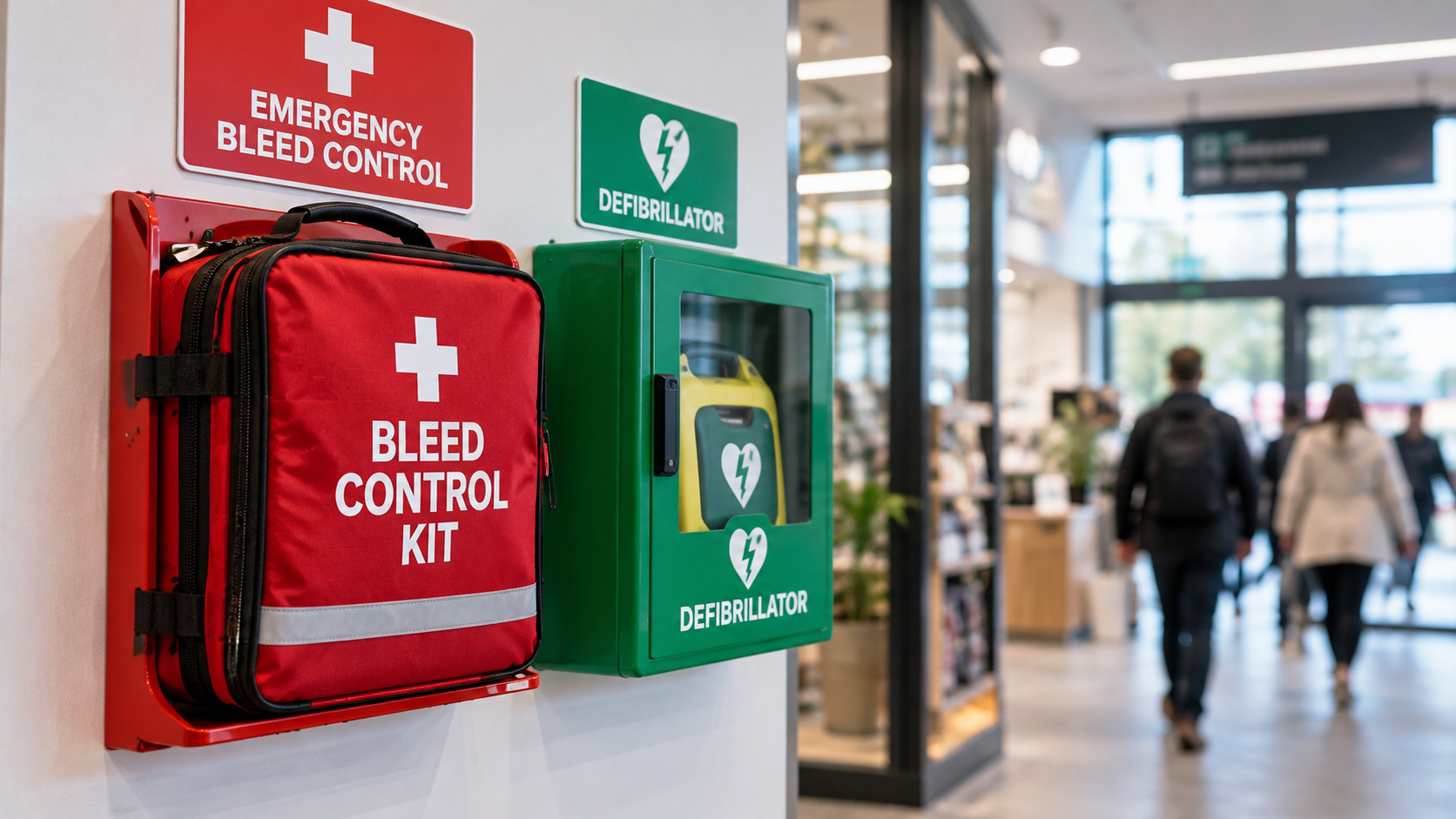
Employers are being urged to review their workplace safety procedures and consider installing emergency bleed control kits alongside defibrillators, amid growing concerns about violence and weapon-related incidents affecting employees and customers.
Black Onyx Academy, a veteran-led knife crime prevention and training organisation, says many UK businesses remain inadequately prepared to respond to serious violent incidents, despite having established procedures for other workplace emergencies.
The organisation is calling for employers to take a more proactive approach to managing the risks of workplace violence, including providing staff with conflict de-escalation training and the skills needed to respond to life-threatening injuries.
Its warning follows figures cited from the British Retail Consortium’s 2026 Crime Report, which indicate that retail workers experience more than 1,600 incidents of violence and abuse every day.
The report records approximately 590,000 incidents annually, including 13,000 incidents involving a weapon, equivalent to around 36 weapon-related incidents per day.
Separately, police recorded 48,774 offences involving knives or sharp instruments in England and Wales in the year ending March 2026.
While these figures cover different categories of crime, they underline the importance of assessing violence-related risks in workplaces where employees interact with members of the public.
Employers Urged to Review Workplace Violence Procedures
Black Onyx Academy argues that public discussion about knife crime has largely concentrated on policing, criminal justice and young people, with less attention given to the preparedness of workplaces where violent incidents may occur.
The organisation believes businesses operating in retail, hospitality, transport and other public-facing sectors should consider whether their existing health and safety arrangements adequately address the possibility of serious violence.
Stefan Northfield, Strategic Lead at Black Onyx Academy, said:
“Most employers have a fire evacuation plan and a defibrillator on the wall, but almost none have a plan for what happens if violence escalates on their premises,” said Stefan Northfield, Strategic Lead at Black Onyx Academy. “Retailers, transport operators, hospitality venues and offices are increasingly the backdrop for serious incidents, yet staff are rarely trained to recognise risk, de-escalate a situation or stop catastrophic bleeding in the minutes before paramedics arrive. Those minutes decide whether someone lives or dies. Preparedness is now part of an employer’s duty of care, and it’s far cheaper than the cost of getting it wrong.”
The academy says organisations should consider how staff would respond if a threatening situation developed into a serious assault, particularly where emergency services might take several minutes to arrive.
Its recommendations focus on preventing violence wherever possible, protecting employees and customers, and ensuring that appropriate emergency equipment and trained personnel are available.
Should Bleed Control Kits Become Standard Workplace Equipment?
One of the academy’s central recommendations is for employers to consider providing catastrophic bleed control kits in locations where the risk assessment identifies a need.
These kits are designed to help trained individuals manage severe bleeding while waiting for emergency medical assistance.
Depending on the equipment supplied, they may contain specialist dressings, tourniquets and other materials intended to control life-threatening blood loss.
Black Onyx Academy argues that such equipment should become as familiar in appropriate workplaces as automated external defibrillators.
However, there is currently no general legal requirement for every UK employer to install a catastrophic bleed control kit.
Under workplace health and safety legislation, employers must assess relevant risks and provide suitable first-aid arrangements based on the nature of their operations, workforce and working environment.
Businesses considering additional emergency equipment should therefore assess their particular risks, seek appropriate professional guidance and ensure employees receive suitable training.
The presence of specialist equipment alone does not guarantee an effective emergency response.
Three Questions Employers Should Ask
Black Onyx Academy recommends that organisations examine three key aspects of their preparedness for violent incidents.
1. Are employees trained to recognise and de-escalate conflict?
Staff working in public-facing roles may encounter threatening behaviour, verbal abuse or situations that have the potential to escalate.
Appropriate training can help employees identify warning signs, maintain personal safety and understand when to withdraw and seek assistance.
Employers should ensure that staff are not expected to physically intervene in dangerous situations beyond their training or responsibilities.
2. Is appropriate emergency first-aid equipment available?
Employers should consider whether their first-aid provision reflects the risks associated with their premises and activities.
Where there is a foreseeable risk of severe traumatic injury, specialist bleeding-control equipment and relevant training may be appropriate.
3. Is there a clear response plan for serious incidents?
Emergency procedures should establish how employees can raise the alarm, contact emergency services, move people away from danger and support injured individuals when it is safe to do so.
Plans should also address communication, responsibilities and the support available to employees following a traumatic event.
Regular reviews and practical exercises can help identify weaknesses before an emergency occurs.
Martyn’s Law Will Introduce New Security Requirements
The academy’s recommendations come as businesses and public venues prepare for the implementation of Martyn’s Law, formally known as the Terrorism (Protection of Premises) Act 2025.
The legislation introduces requirements for qualifying premises and events to improve their preparedness for terrorist attacks.
Implementation is expected in spring 2027, although the precise commencement arrangements remain subject to confirmation.
Depending on their capacity and classification, qualifying premises will be required to introduce appropriate public protection procedures, with additional measures applying to certain larger venues and events.
The legislation is primarily concerned with terrorism preparedness rather than general knife crime or all forms of workplace violence.
Nevertheless, some of the principles involved, including emergency planning, communication and staff awareness, may also be relevant to wider workplace safety arrangements.
Employers should distinguish between their existing health and safety responsibilities and any additional obligations that may apply under Martyn’s Law.
Veteran-Led Training Focuses on Prevention and Emergency Response
Black Onyx Academy provides training through its accredited S.A.L.T. (Save.A.Life.Today) programme.
The organisation says its courses draw on military experience in risk assessment, conflict management and emergency response, adapting those skills for civilian settings.
Training is offered to businesses, transport operators, schools and community organisations, with an emphasis on practical preparedness.
The academy has also introduced what it describes as the UK’s first veteran-led Mobile Knife Amnesty Van.
The vehicle travels to communities to encourage the surrender of weapons while providing opportunities for public education and discussion about knife crime prevention.
The initiative forms part of the organisation’s wider approach to addressing violence through prevention, awareness and practical training.
Workplace Violence Requires a Broader Health and Safety Response
For employers, the issue extends beyond the immediate risk of physical injury.
Exposure to threatening behaviour and violence can have lasting consequences for employee wellbeing, including anxiety, stress, absence from work and reduced confidence in the workplace.
Businesses should consider these risks as part of their broader approach to occupational health and safety.
Effective measures may include staff training, appropriate security arrangements, clear incident reporting procedures, access to first aid and support for employees affected by violence.
Employers should also review whether their existing policies adequately protect lone workers and employees working late shifts or in locations where assistance may not be immediately available.
Black Onyx Academy believes the priority should be to move beyond reacting to serious incidents and ensure that organisations are better prepared to prevent harm.
While the level of risk will differ between workplaces, the organisation’s message is that businesses should not assume existing fire safety and first-aid arrangements are sufficient to address every potential emergency.
For HR professionals and business leaders, reviewing violence-related risk assessments, employee training and emergency response procedures could be an important part of maintaining a safe working environment.
—
Source: Black Onyx Academy, press release dated 8 October 2026.
Editorial note: The crime statistics and the proposed spring 2027 implementation date for Martyn’s Law are reproduced from the supplied release and have not been independently verified against the underlying official publications. The recommendation to install bleed control kits is the academy’s position, rather than a universal legal requirement.
Black Onyx Academy is a veteran-led knife crime prevention and training organisation, delivering the accredited S.A.L.T. (Save.A.Life.Today) course to schools, businesses, transport operators and community organisations across the UK. Its Mobile Knife Amnesty Van tours communities nationally, combining weapon surrender with public education.