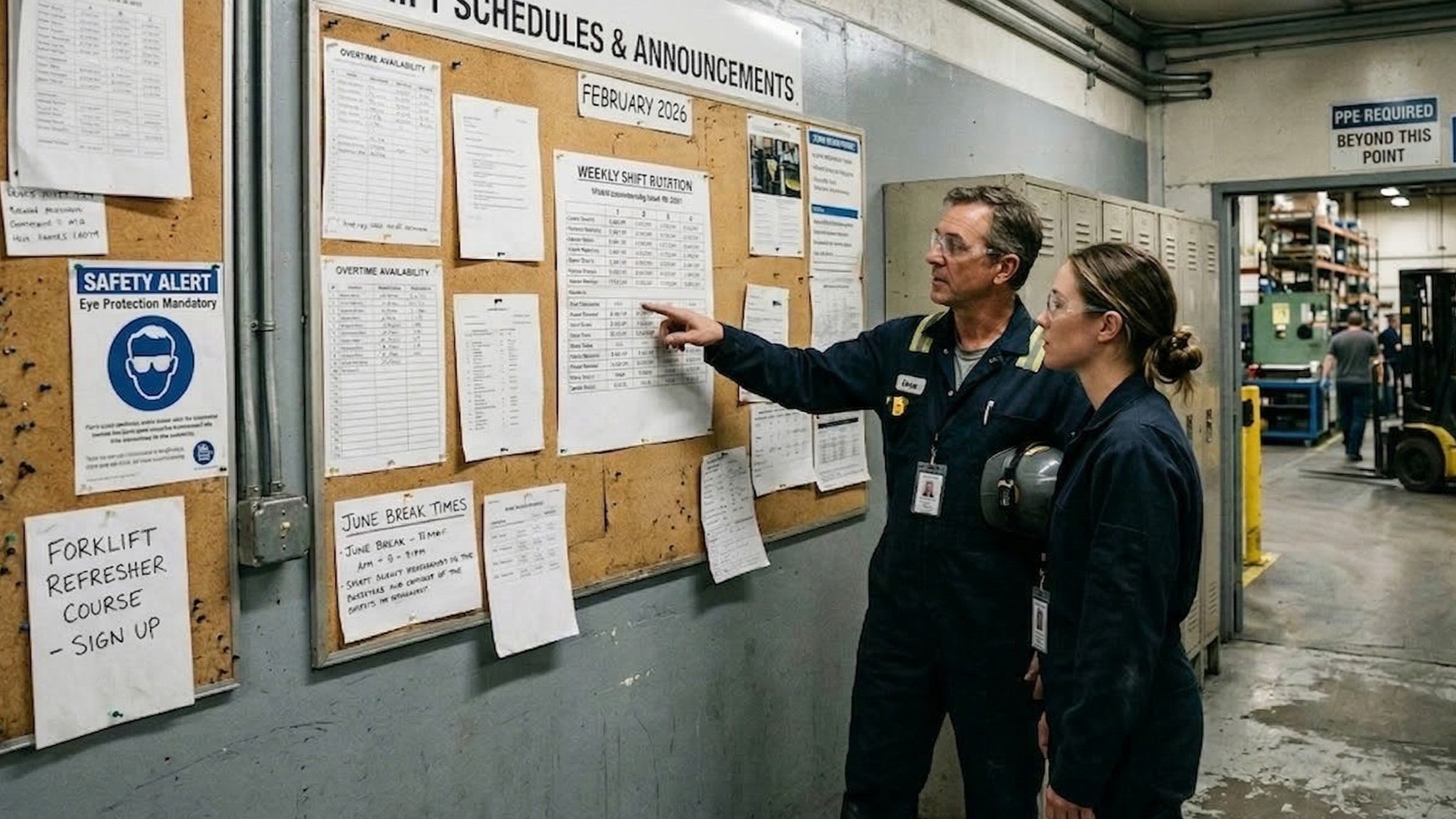
A survey of more than 2,000 UK employees found that 64% of frontline workers receive shift updates through informal channels — including WhatsApp, texts, email, paper rotas, or verbal communication. These methods offer little record‑keeping or version control, leaving organisations exposed as the Act introduces clearer expectations around notice periods and compensation for last‑minute changes.
The legislation aims to strengthen worker security and fairness across employment law. For shift‑based industries, it introduces rights to reasonable notice of schedule changes and compensation for short‑notice cancellations, while tightening rules on zero‑hours contracts and dismissal protections.
Russell Howe, Group Vice President EMEA at UKG, said the findings show a widening gap between employers who have modernised and those still relying on manual systems: “Organisations using modern scheduling and workforce managements platforms will be best positioned to adapt to the changes, maintain compliance, and build employee trust. Those relying on spreadsheet rotas and ad hoc communications will struggle to ensure accurate compensation for last-minute changes. They will face compliance challenges and will fall behind their competitors in business performance and recruiting.”
Outdated scheduling still the norm
One in three frontline workers (33%) say they receive rota updates via WhatsApp, text, or email, and a further 26% rely on physical postings or verbal briefings. For employers, this means limited audit trails and greater difficulty proving compliance — particularly around cancellations, short‑notice changes, and any compensation owed.
“Frontline-heavy industries like hospitality, logistics, manufacturing, and retail, need modern and proactive workforce management systems,” Howe added. “Without them, organisations lack the labour insights needed to match staffing with demand. Now they will also face additional compliance risk, especially during seasonal peaks and valleys when customer demand fluctuates.”
Notice periods and compensation may trigger major operational change
Nearly six in ten (59%) frontline employees believe they should receive at least one week’s notice for a schedule change, and over a quarter prefer two weeks or more. Yet 26% say their shifts were changed or cancelled with less than seven days’ notice in the past six months.
Despite the new legislation, only 23% of shift workers currently receive any compensation when shifts are cancelled on short notice. Workers in larger organisations (250+ employees) appear even less likely to be compensated than those in SMEs.
The survey also suggests a possible gender gap: 29% of men report receiving compensation, compared with 17% of women. While the research does not identify the cause, it underlines the need for more consistent and equitable scheduling practices.
Survey methodology
This survey has been conducted using an online interview administered to members of the YouGov Plc UK panel of 2.5 million+ individuals who have agreed to take part in surveys. Emails are sent to panellists selected at random from the base sample. The e-mail invites them to take part in a survey and provides a generic survey link. Once a panel member clicks on the link they are sent to the survey that they are most required for, according to the sample definition and quotas. (The sample definition could be “GB adult population” or a subset such as “GB adult females”). Invitations to surveys don’t expire and respondents can be sent to any available survey. The responding sample is weighted to the profile of the sample definition to provide a representative reporting sample. The profile is normally derived from census data or, if not available from the census, from industry-accepted data.
Total sample size was 2,014 adults. Fieldwork was undertaken by YouGov between 29 January and 6 February 2026. The survey was carried out online. The figures have been weighted and are representative of British business size and region.