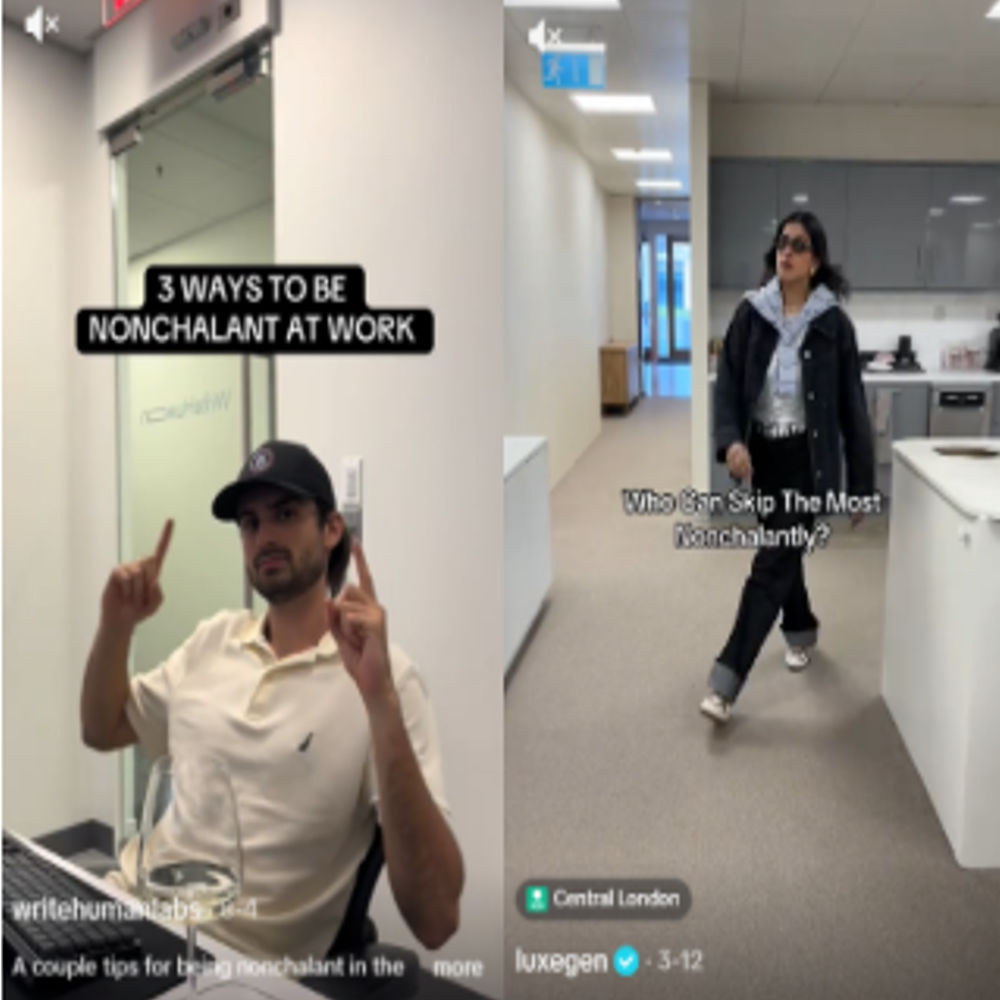
Lately, one word has been everywhere on the internet – nonchalant. It’s sparked funny videos and endless discussions around this particularly laid-back personality trait.
Nonchalant is often used to describe someone who appears who stays calm, cool, and collected, no matter what’s going on around them.
Credit: https://vm.tiktok.com/ZNdTDo1TL/, https://vm.tiktok.com/ZNdTDKsat/
But how does this personality type translate into the workplace? Ben Wright, Global Head of Partnerships at Instant Offices, “People who are seen as nonchalant usually fall under what’s called the peaceful personality type, which comes with both advantages and challenges.“
On the positive side, nonchalant individuals are often easy-going, composed, and great at managing pressure as well as maintaining harmony within a team. However, their calm exterior can sometimes make them hard to read, leading others to mistake their laid-back nature for disinterest or a lack of drive.
This also opens up a wider conversation about understanding personality types and how to better support different personality types at work within a team.
There are multiple tests that can be used to gain insight into an individual’s personality, like 16personalities and Truity. According to inspirational speaker Allison Mooney, all humans can be categorised into four personality types:
The Playfuls: Innovative, creative and enthusiastic, these are extroverts who are great at networking, socialising and having fun. While they’re forgiving and fast working, they also tend to be unorganised and easily distracted. These personality types need attention, affection and approval.
The Peacefuls: Easy-going, patient and calming, these steady individuals remain the same through the highs and lows and are sometimes hard to read. They’ll do everything they can to avoid confrontation. These personality types need harmony, respect and to be valued.
The Powerfuls: Productive, assertive and decisive, these risk-takers are always doing and are determined to perform tasks their way. They can be impatient and often unsatisfied, always searching for the next goal. These personality types need loyalty, credit and appreciation.
The Precises: Meticulous, ordered and lovers of structure, this is a group of perfectionists who abhor making mistakes. They tend to prefer work over play. These personality types need their own space, as well as quiet and sensitivity.
Working with different personality types is a chance to learn, teach, and experience life from a different perspective. By engaging with various personality types differently, a manager can form stronger bonds with a team and ultimately fulfil a higher level of potential. Ben then goes on to say how businesses can better support and cater to different personality types in the workplace.
-
Ask your employees how they learn best
Whether visually, through practice, with instruction or on their own, once you determine how an employee becomes most engaged when learning something new, you’ll be able to communicate with them more effectively going forward.
-
Create a space where different personalities can thrive
Ensure your office space is set up to cater to the needs of different personalities on your team. One size most certainly doesn’t fit all, and some businesses create breakaway areas, entertainment areas, and quiet spaces within the office to give individuals a change of pace, while others choose flexible offices which are already set up to accommodate their needs.
-
Choose a communication technique
By learning how a team member communicates best, you can start to understand how messages are interpreted by them, and work towards developing more effective channels of communication.
When considering how to manage people, there’s no single solution to make the process easy. Different personality types require different types of management to thrive, and understanding a team better is just one of the things a manager can do to make a positive impact.
If you don’t want to receive emails like this from me, please let me know here.