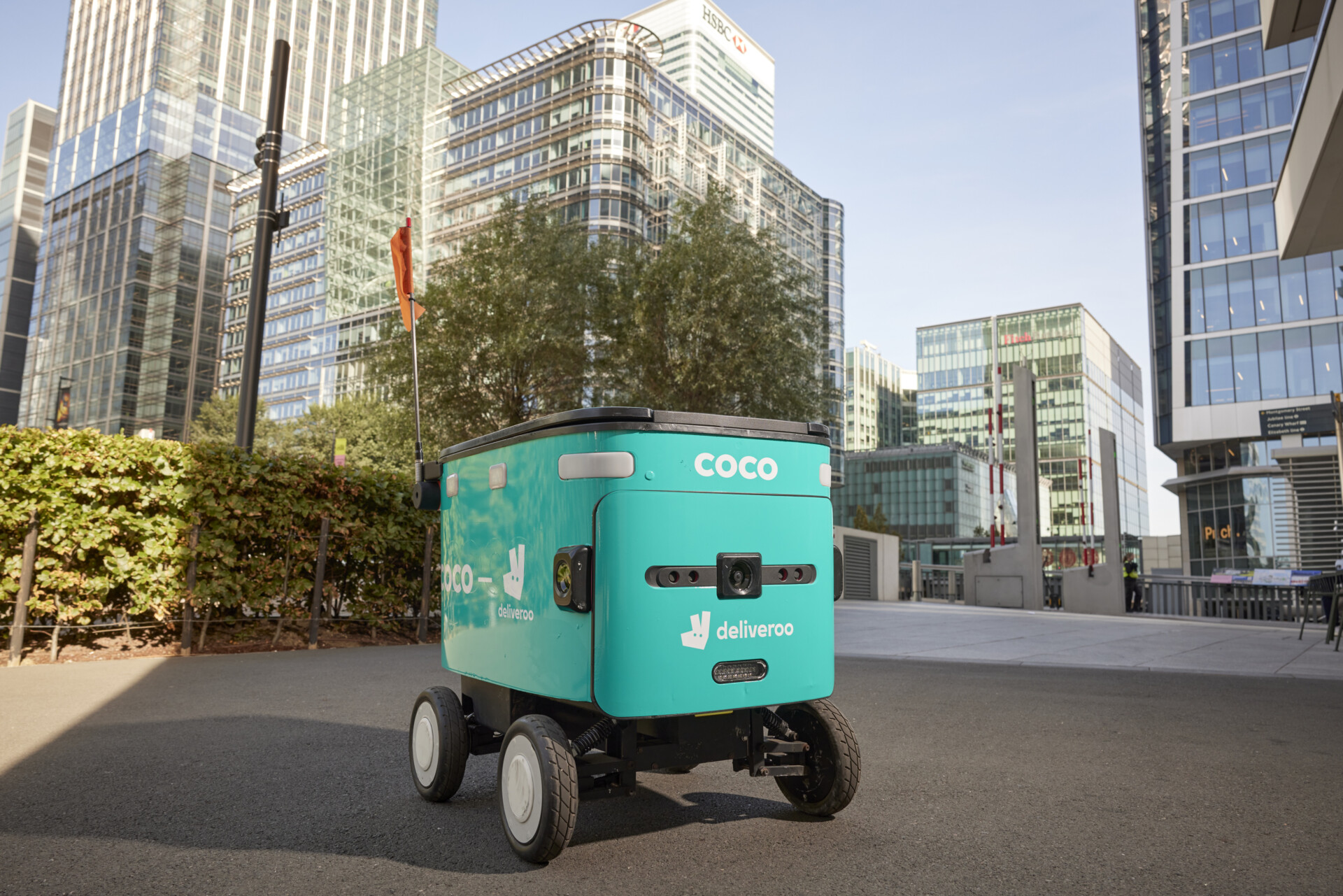
Autonomous food delivery robots are set to arrive in Nottingham as part of a major UK rollout by Deliveroo and Coco Robotics, but the GMB union has warned that technological innovation must not come at the expense of existing couriers.
Plans to introduce autonomous delivery robots onto the streets of Nottingham have sparked concerns about the future of courier jobs, with trade union GMB calling for greater consultation and investment in the workers who currently support the food delivery industry.
The proposed trial forms part of a new partnership between Deliveroo and US technology company Coco Robotics, which will see electric delivery robots introduced across several UK towns and cities.
The rollout, announced on 5 October 2026, will begin with a 12-month trial in London’s Canary Wharf before expanding to Nottingham, Milton Keynes, Leeds and Stockton-on-Tees over the coming weeks and months.
It marks the first time Deliveroo has deployed autonomous delivery vehicles in the UK, following similar developments involving Coco Robotics and delivery platforms in the United States and Europe.
GMB Warns Automation Must Not Come at the Expense of Workers
Claude Bahati, GMB Organiser, criticised the lack of engagement with workers over the proposed introduction of the technology.
In a statement, Bahati said:
“If Deliveroo can afford to invest in autonomous technology, why can it not invest properly in the workers who keep the platform running every day?
“Innovation should not come at the expense of real people, and these developments must always be negotiated with workers.
“It is disappointing that engagement from Deliveroo or the Mayor has not been forthcoming.
“Food couriers continue to struggle with rising living costs and are calling for fairer pay and compensation for return journeys.
“At the same time, many riders face poor treatment at work, often being forced to wait outside in all weather conditions without being given access to the facilities and support needed to do their job.
“Decision makers must pay greater attention to the realities of the gig economy and ensure that riders are treated with dignity, respect and fairness. Deliveroo’s future must include investment in the people who have built its success, not just it’s technologies.”
The union’s intervention highlights the wider debate about automation in the gig economy, particularly whether technological improvements will create additional opportunities or gradually reduce demand for human delivery workers.
Although Deliveroo says most orders will continue to be handled by its existing courier network, the expansion of autonomous delivery services raises longer-term questions about employment, pay and the distribution of work.
How Will Deliveroo’s Autonomous Delivery Robots Work?
The robots developed by Coco Robotics are fully electric, four-wheeled vehicles designed to transport food and other small orders over relatively short distances.
Unlike conventional delivery vehicles, they travel along pavements at approximately walking speed.
Each robot uses onboard cameras, sensors and artificial intelligence to identify obstacles, navigate pedestrian areas and respond to changing street conditions.
According to the companies, the navigation technology processes environmental information locally rather than relying entirely on cloud connectivity.
The robots are also subject to location-specific speed limits and routing rules, with trained operators providing supervision.
The technology is intended to allow deliveries to be completed without a courier physically transporting each order from the restaurant to the customer.
Unlike conventional doorstep delivery, customers will need to meet the robot at a designated collection point, which may be outside their property rather than directly at their front door.
Once the robot arrives, customers receive a notification through the app and can unlock its storage compartment to retrieve their order.
Deliveroo’s terms also explain that robot delivery may be unavailable because of weather or road conditions, and that conventional riders may be used when necessary.
Nottingham Among Five Locations Selected for UK Rollout
The Nottingham trial forms part of a wider programme that will initially cover five locations.
Deliveroo and Coco Robotics have confirmed that the rollout will begin in Canary Wharf, where participating restaurants will include Patty&Bun, Signorelli and Beam.
Additional businesses, including Ole & Steen, Royal China and Din Tai Fung, are expected to join as the service expands.
In Milton Keynes, restaurants identified for the forthcoming service include Smoke and Pepper and 5 Akhis.
The companies have not yet confirmed which Nottingham restaurants will participate, the precise areas where the robots will operate or the number of vehicles expected to be deployed.
The partnership will also involve investment in operational infrastructure, including depots and charging facilities.
Deliveroo and Coco Robotics say the expansion will create skilled employment opportunities in areas such as robot maintenance, logistics and operational support. However, no specific employment figures have been announced for Nottingham.
East Midlands Mayor Welcomes Autonomous Delivery Trial
The proposed introduction of delivery robots has received support from East Midlands Mayor Claire Ward, who described Nottingham’s participation as an opportunity to explore new technology.
In a statement published by the East Midlands Combined County Authority on 5 October, Ward said:
“The East Midlands has always been a region that nurtures and welcomes innovation. We want to meet the needs of the present whilst shaping the future, and this means taking opportunities to work differently.”
She welcomed the pilot scheme and said the authority looked forward to examining the potential benefits of autonomous delivery for businesses, residents and the wider region.
The Mayor’s support contrasts with the concerns expressed by GMB, which says engagement with the union over the proposed changes has not been forthcoming.
The distinction is important: while local authorities are considering the potential economic and technological benefits, the union is seeking assurances about how automation will affect existing delivery workers.
Deliveroo Says Robots Will Complement Human Couriers
Deliveroo maintains that its autonomous delivery programme is intended to supplement its existing rider network rather than replace it.
The company says the majority of orders will continue to be fulfilled by human couriers, with robots particularly suited to shorter journeys in urban areas.
Miki Kuusi, Deliveroo’s chief executive, said the partnership would give local restaurants and retailers greater flexibility in meeting customer demand.
He also expressed confidence in the potential of autonomous delivery and other emerging technologies to support high street businesses.
The initiative forms part of Deliveroo’s broader strategy to develop a combination of delivery methods rather than relying exclusively on traditional couriers.
Deliveroo became part of US-based DoorDash following its acquisition in 2025. Coco Robotics has previously worked with DoorDash and Wolt in other international markets, providing experience that the companies intend to build upon during the UK expansion.
Could Delivery Robots Threaten Courier Jobs?
The potential impact on employment is likely to be one of the most closely watched aspects of the Nottingham trial.
Although autonomous robots currently have limitations compared with human couriers, including restricted carrying capacity, relatively low speeds and difficulties operating in certain conditions, they could become increasingly capable as the technology develops.
For delivery platforms, automation offers the prospect of handling some short-distance orders without requiring an individual courier for every journey.
This could potentially reduce operating costs and increase delivery capacity, particularly in densely populated urban areas.
However, the implications for workers are less certain.
If robots take on deliveries that would otherwise have been completed by human riders, the volume of work available to couriers could be affected.
Equally, if autonomous delivery enables platforms to handle additional orders that would not otherwise have been commercially viable, the technology could expand the overall delivery market.
At present, there is insufficient published information to determine which outcome is more likely in Nottingham.
The companies have not released detailed forecasts showing how many deliveries robots are expected to complete, how this might affect rider earnings or whether existing couriers will be offered opportunities to move into newly created technical roles.
These questions are central to GMB’s demand for meaningful consultation before autonomous delivery systems become more widespread.
Accessibility and Pedestrian Safety Will Be Important
Another consideration is how delivery robots will interact with pedestrians, particularly people with disabilities.
Pavements are shared spaces, and introducing autonomous vehicles raises practical questions about obstruction, safe navigation, pedestrian priority and accessibility.
Coco Robotics says its vehicles are designed to travel at walking pace, identify obstacles and respond to changing conditions.
The company has also established a partnership with BlindSquare, an accessibility navigation service for blind and partially sighted people.
Under the arrangement, information about pavement hazards identified by Coco’s robots can be shared with BlindSquare to help users navigate obstacles such as discarded e-scooters and temporary construction work.
The companies argue that this could provide wider accessibility benefits beyond the delivery service itself.
Issues such as narrow footways, crowded shopping areas, road crossings and interaction with wheelchair users will all need to be managed effectively.
Environmental Benefits Also Under Scrutiny
Deliveroo and Coco Robotics are promoting the fully electric vehicles as a more environmentally sustainable option for short-distance deliveries.
The robots produce no direct exhaust emissions during operation and could potentially reduce the need for some journeys by motor vehicles.
However, the overall environmental benefits will depend on which forms of transport they replace.
Where robots substitute for petrol-powered motorcycles or cars, reductions in direct transport emissions may be possible.
The benefits may be smaller when they replace journeys already undertaken by cyclists or electric bicycle couriers.
A complete environmental assessment would also need to consider electricity consumption, battery production, vehicle manufacturing and maintenance.
No detailed Nottingham-specific environmental assessment has been identified in the published launch information.
A Wider Test for the Future of the Gig Economy
The Nottingham trial is part of a broader shift towards automation in last-mile delivery, an industry that has traditionally depended on large networks of self-employed couriers.
Autonomous vehicles, drones and AI-powered logistics systems are increasingly being explored as potential ways to improve delivery efficiency.
For technology companies, these developments offer opportunities to introduce new services and reduce some of the operational challenges associated with urban deliveries.
For workers, however, the transition raises questions about job security, earnings and whether the benefits of technological progress will be shared fairly.
The concerns raised by GMB also extend beyond automation itself.
The union has highlighted existing complaints about rider pay, compensation for return journeys and access to basic facilities while working.
These issues will not necessarily be resolved by the introduction of new delivery technology.
The challenge facing Deliveroo and other platforms is therefore to demonstrate that investment in automation can coexist with improvements in working conditions.
What Happens Next in Nottingham?
The proposed rollout is expected to progress over the coming weeks and months, although a firm start date for Nottingham has not been publicly confirmed in the announcements reviewed.
Several important details remain outstanding, including the number of robots to be deployed, participating restaurants, operating areas and arrangements for consultation with delivery workers.
The trial will provide an opportunity to assess whether autonomous vehicles can operate safely and reliably in a British city while delivering commercial benefits to local businesses.
It may also provide an early indication of how automation could affect the future of platform-based delivery work.
For GMB, the central issue is ensuring that the introduction of new technology does not leave existing workers behind.
For Deliveroo and Coco Robotics, the challenge will be demonstrating that autonomous delivery can improve services while addressing legitimate concerns about jobs, pedestrian safety and the future of urban transport.
With Nottingham among the first UK cities selected for the technology, the outcome could help shape how autonomous delivery systems are introduced elsewhere in the country.
Sources and Further Reading
The additional facts in this report were checked against the following published announcements and reporting:
- Deliveroo – Official Coco Robotics Partnership Announcement, 5 October 2026
- East Midlands Combined County Authority – Mayor Welcomes Nottingham Robot Delivery Trial
- Coco Robotics – UK Partnership Announcement
- Deliveroo – Robot Delivery Terms and Conditions
- The Caterer – Restaurants Preparing to Introduce Robot Deliveries
- https://www.prnewswire.com/news-releases/coco-robotics-and-deliveroo-announce-exclusive-partnership-to-scale-robot-deliveries-across-the-uk-302897843.html