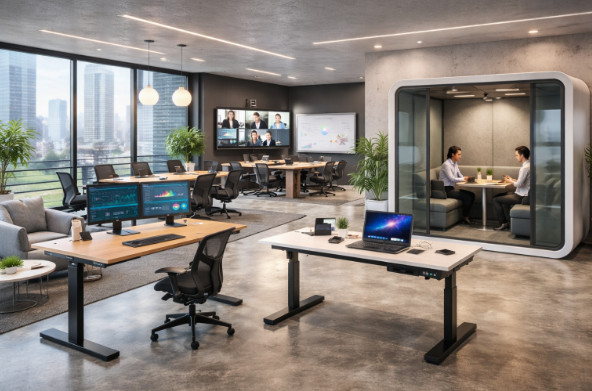
As employers rethink the purpose of the office, office desks are undergoing one of the biggest shifts in decades. Companies are redesigning offices to better suit different tasks and ways of working. For employers, the conversation is no longer about how many desks they need, but what these desks need to do.
The Rise of Activity-Based Desk Design
More companies are swapping fixed desks for flexible desks. Allowing staff to pick a desk based on whatever project they have going on. This might include:
- quiet desks for focused work
- collaborative boardroom desks for team sessions
- touchdown desks for short visits
- tech-enabled desks for video calls
- A desk pod, soundproof tech-ready sanctuary for employees to escape office noise.
This approach reflects the reality of hybrid work. Employees come into the office with purpose, and desks support that purpose.
Why Desk Variety Matters to Employers
One-size-fits-all desk setups often fail to meet the needs of a diverse workforce. Some roles need deep focus or collaboration, and many staff switch between the two.
A variety of office desks can support different working styles without increasing the size of the office. Improving productivity and decreasing frustration.
Giving employees choice over where and how they work can have a positive impact on engagement and morale. Staff feel more in control of their working day, without employees relying on costly benefits or remote work incentives.
Managing Space More Intelligently
For managers, flexible seating is a goldmine for office insights. Desk booking and occupancy sensors allow employers to see which desks are most used and which are gathering dust. These Small PIR (infrared) or vibration sensors under desks track real-time use. This data-led approach allows organisations to refine their office designs over time.
Balancing Flexibility with Comfort
While flexibility is key, comfort remains essential. Employers still have a duty of care, even in shared or non-assigned desk environments. Height-adjustable desks, ergonomic seating help ensure employees can work safely and comfortably.
Clear guidelines and good-quality furniture are crucial to making flexible desk strategies successful.
What This Means for Employers
Office desks are no longer furniture; they’re tools that shape how people use the workplace. For employers, rethinking desk design can help:
- support hybrid and flexible working policies
- improve space efficiency
- Boost employee engagement
- adapt offices without constant refits
As working patterns continue to evolve, desks that offer choice, comfort, and adaptability will play a central role in keeping offices relevant and effective.