Another year, and another Prime Minister. It is all becoming a bit “Groundhog Day” in UK politics at the moment.
Yet this latest change does at least bring the promise of some more radical thinking, not least in the area of de-centralisation and devolution. What this will mean for the world of work and HR teams remains to be seen, but there is already one intriguing idea in train that deserves some attention.
The Devolution agenda
Even before he took office, Andy Burnham was strongly hinting at a partial change of address for the Prime Minister and his new Cabinet colleagues.
At a press conference at the People’s History Museum in Manchester on the 29th June – shortly after becoming the Member of Parliament for Makerfield – Burnham spoke at some length of his vision for a less centralised Britain. He promised;
“Powers for our rural economies to address issues specific to them, like inadequate transport. Powers for areas undergoing industrial transition, like Port Talbot, Scunthorpe and Aberdeen.
Powers for our proud coastal towns to reimagine themselves for the twenty first century.
And, yes, more powers for London too, over education and housing, so that London can do more for itself and remain the world’s greatest capital city.”
So far, so standard devolution speech. Yet he went on to say this;
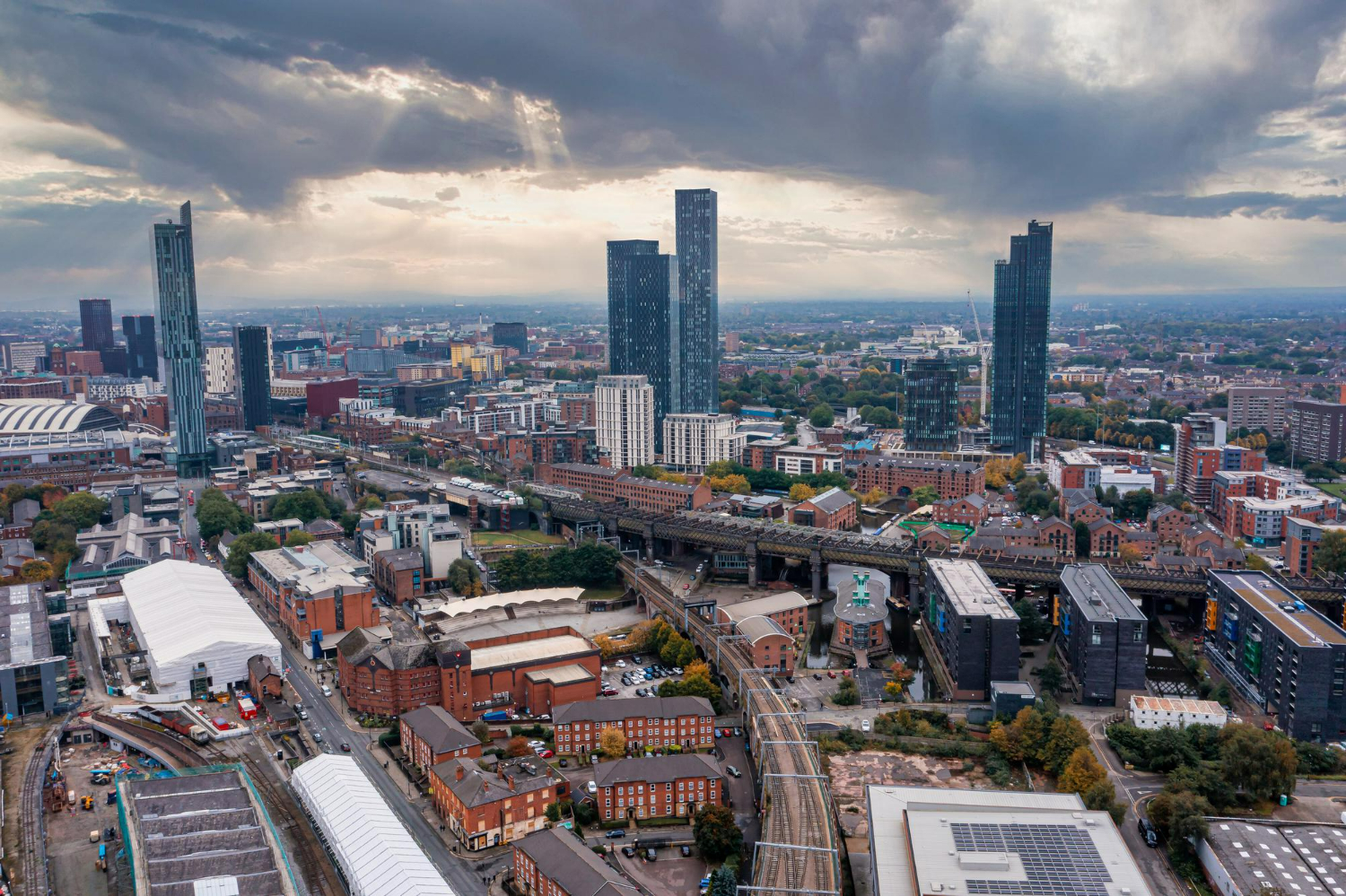
“The change will be driven through the Prime Minister’s Office in an extended operation based here in Manchester. But here’s the important thing – it will only be based here…
…now get this – No 10 North will be the nerve centre for a rewired Britain. It will be the conduit through which we redistribute power and resources across the UK. It will coordinate all parts of government, at national and local level, to agree a long-term economic strategy and help all places set new growth ambitions.”
No. 10 (North)
And this is indeed rather different.
Many Prime Ministers have previously spoken about the need to move some of the Westminster/ Whitehall machine out of the nation’s capital city, and some have even taken small steps to deliver that, up to an including a few full Cabinet meetings taking place outside of London.
Yet none has seriously proposed moving the Prime Ministerial machine away from London. Until now.
HQ, branch office, or remote working?
So how should this be viewed?
Is this an alternative HQ for national government, yet another “branch” office of the Civil Service, or an office “hub” for remote Cabinet members and their civil servants who need access to secure office facilities without travelling to the other end of England?
The truth is that we just don’t know yet. And it’s tempting to assume that the Prime Minister and his team are not entirely sure either, not least because of the speed in which Burnham has ascended to the top job.
That said, there have already been relocation packages announced for Civil Servants, so it is clear that something tangible is very much on the cards.
Inspired by remote working?
But, whatever the objectives and rationale, this is clearly a move at least partially inspired by the success of remote working across the 2020s.
Regular readers of this column will know that I have been a champion for the benefits of remote working from long before the pandemic forced so many employers to finally accept that remote working was not only possible, but often a desirable employment and business model.
One of my constant contentions has been that technology enables remote workers to have the same access and control over their work as their office-bound colleagues. Not only that – and as I explored in a post last summer – remote working can now also be genuinely seen as a reasonable adjustment to help keep those with medical conditions actively in work.
And remote working is entirely complimentary to the ideals of devolution. Why should employers limit themselves to a pool of potential employees within a small geographical reach of a major office? Surely a wider search presents the opportunity to recruit even better candidates in more remote locations. And the recruitment of such remote workers will help bring up the average pay in such regions and ensure that pay is spent locally on goods and services which is a key aim in delivering a more equal Britain.
Yet that doesn’t mean that there aren’t challenges with remote work. For instance – and as I covered in my “The loneliness of the long-distance worker” post earlier this year – employer and Human Resources duty of care still applies to remote workers but are not insurmountable as long as those challenges are clearly understood from outset.
Contact with reality
So remote working can and does work for many and provides a blueprint for how the No. 10 (North) machine could work well.
That said, I’m not sure that the concept of No. 10 (North) will survive contact with reality. With the greatest of respect to the fine city of Manchester, it is not the venue that foreign dignitaries would expect when visiting the UK. London is one of the world’s most iconic cities, and therefore the one that the Prime Minister will still have to frequent for most State business.
Not only that, but Manchester is a strange choice to support the devolution agenda. The economy in Manchester is already doing well – hence the popularity of its former Mayor and now Prime Minister. Placing this new funding for No. 10 (North) there seems counterproductive when there are so many other population centres that would benefit from that valuable investment.
There is also a geographical challenge. Manchester is not much (or any) more accessible to many MPs and Civil Servants in the extremities of England and the wider UK than London. The Prime Minister will also need to stay close to the tea rooms of Westminster to avoid a similar fate to his immediate predecessor. It follows that the remoteness of No. 10 (North) could be a problem in both cases.
And last – but not least – the choice of Manchester may become linked solely with the home location of the current Prime Minister. What happens if the next leader of the nation comes from Scotland, Wales, Northern Ireland, the English Southwest or East Anglia? The temptation to abandon the project and/or relocate elsewhere will be tempting, perhaps leaving No. 10 (North) a largely redundant concept and building?
Help or Hinder?
And any such negative outcome will surely strengthen the resolve of those that still choose not to believe in the future of remote work. Which would be a shame, as remote working is a key component of successful wealth smoothing and devolution across the modern United Kingdom.
It follows that I – and Human Resources teams across the UK – should be watching the progress of No. 10 (North) with some genuine interest. The outcome of the project could yet help or hinder the future of remote working.